
Gray Blending vs Full Gray Coverage in Orlando: Which Looks More Natural & Grows Out Better?
Gray hair is not one problem with one solution. Some clients want every gray strand covered. Others are tired of seeing a hard root line only a few weeks after coloring and want something softer, more dimensional, and easier to maintain.
That is where gray blending and traditional full gray coverage differ.
Gray Blending vs Full Gray Coverage: The Short Answer
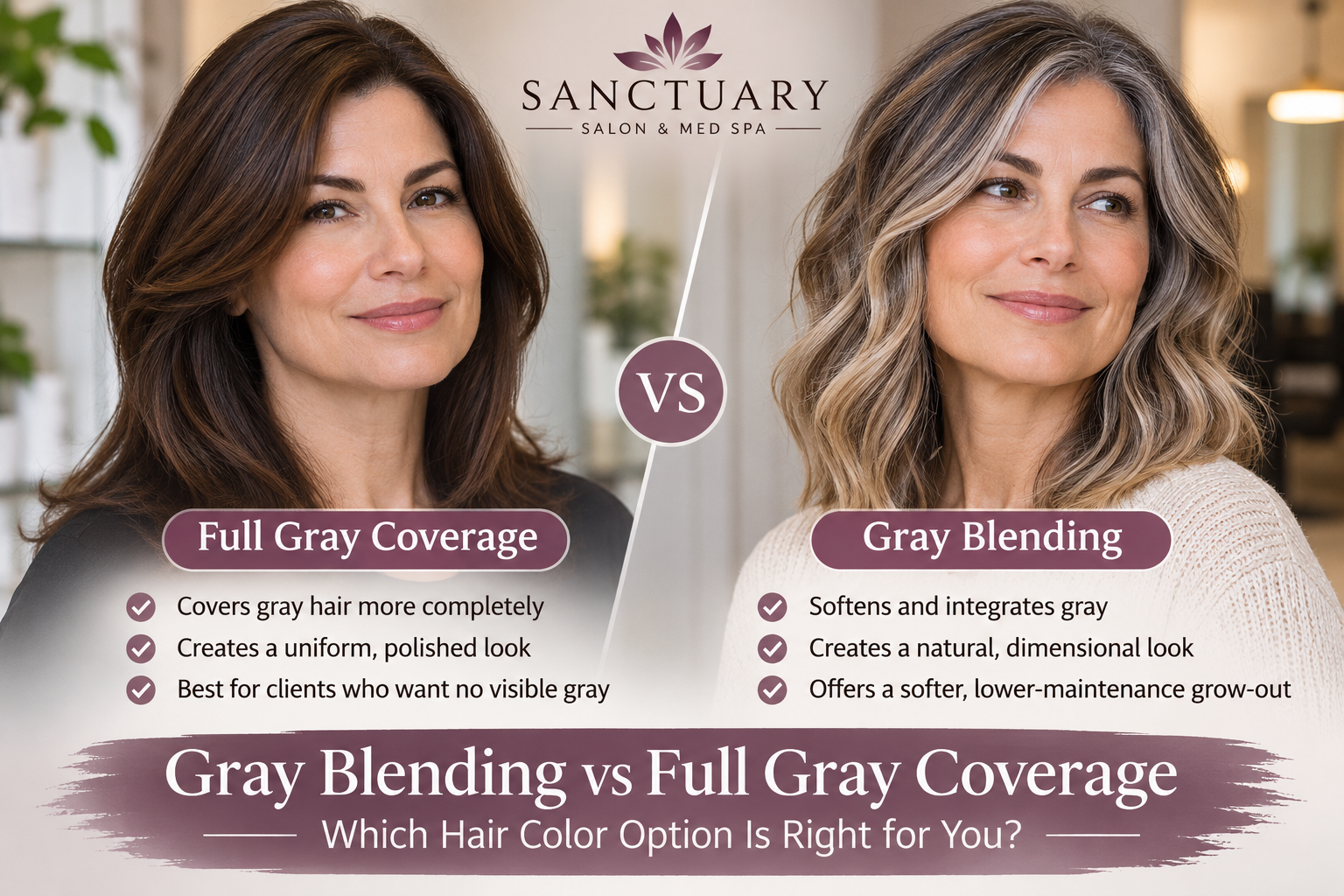
Full gray coverage is designed to cover gray hair more completely, while gray blending softens the contrast between gray and pigmented hair so the grow out looks less obvious.
Neither is automatically better. The right choice depends on how much gray you have, your natural color, how frequently you want to visit the salon, and whether you prefer a polished solid result or a softer dimensional finish.
What Is Full Gray Coverage?
Full gray coverage uses permanent color to cover resistant gray hair and create a more uniform result from root to ends.
It is often preferred by clients who do not want visible gray and are comfortable maintaining the roots regularly.
What Is Gray Blending?
Gray blending works with some of the natural gray rather than trying to erase every strand. Highlights, lowlights, toners, glosses, or strategic color placement may be used to reduce contrast.
The goal is usually a softer, more dimensional result with a less obvious line as the hair grows.
Which Looks More Natural?
That depends on your definition of natural. Full coverage can look beautifully polished when the shade is customized correctly. Gray blending may look more natural to clients who want to keep some silver or soften the transition between gray and their natural base.
Which Has an Easier Grow Out?
Gray blending generally creates a softer grow out because the result is intentionally dimensional. Full coverage creates a clearer contrast between newly grown gray roots and previously colored hair.
Why Gray Coverage Can Start Looking Too Dark
One of the most common concerns is that repeated root color begins to feel heavy or too dark over time. This can happen when color overlaps onto previously colored hair or when the shade is deeper than the client’s natural complexion can comfortably support.
A customized plan may use lighter dimensional pieces, a softer base, or gray blending to reduce that dense appearance.
What If Your Gray Is Resistant?
Some gray hair is more resistant to color and requires careful formulation and processing. Resistant gray does not mean the result has to look flat or overly dark.
Professional formulation can balance coverage with the level of softness and dimension you want.
Can Brunettes Gray Blend Without Going Blonde?
Yes. Gray blending does not have to turn a brunette into a blonde. Strategic lighter pieces can soften contrast while maintaining an overall brunette identity.
This is particularly useful for clients who love being brunette but feel that solid dark root coverage is becoming too harsh.
Can Blondes Gray Blend?
Blonde hair can often incorporate gray softly because the contrast is already lower. Highlights, lowlights and toning can help create a more intentional transition.
How Often Will You Need Maintenance?
Full gray coverage may require more frequent root appointments if you dislike seeing regrowth. Gray blending can often stretch the visual grow out longer because there is less of a hard line.
Your ideal schedule depends on how quickly your hair grows and how much visible gray you are comfortable with.
How Does Your Haircut Affect Gray Blending?
Layers, face framing, and the way the hair moves can influence where highlights and lowlights should be placed. Planning the haircut and color together can create a more polished result.
For more information, see our haircut, hair color and highlights guide.
What Should You Ask for at Your Consultation?
Instead of simply saying, “I want to cover my gray,” explain what you dislike about your current color. Is the root line too obvious? Does the color feel too dark? Are you tired of appointments every few weeks? Do you want to keep some silver?
These answers help your colorist decide whether full coverage, blending, or a combination approach is best.
Explore our hair color services in Orlando for more information.

Frequently Asked Questions
Does gray blending cover all gray hair?
Usually not. The goal is to soften and integrate gray rather than completely eliminate every strand.
Is gray blending lower maintenance?
It can be because the grow out is softer and less defined than full root coverage.
Can gray blending work on dark brown hair?
Yes, but placement and tone need to be customized so the result does not become overly light or brassy.
Will gray blending make me look older?
Not necessarily. The right placement and tone can look modern and dimensional. The result depends on your complexion, haircut and color plan.
Can I switch from permanent gray coverage to blending?
Often, yes, but the transition may take more than one appointment depending on how dark or layered the existing color is.
Choose the Gray Strategy That Fits Your Lifestyle
If you are tired of dark root color, harsh regrowth, or constant touch ups, gray blending may offer a softer alternative. If you prefer complete coverage, a customized full coverage formula may still be the right choice.
Book a hair color consultation in Orlando or call +1 407 909 1011.
0 comment